Why are speed sensor magnets installed on the side cover of a hub motor? What is the difference between one speed sensor magnet and six speed sensor magnets?
I. What is a hub motor speed sensor magnet?
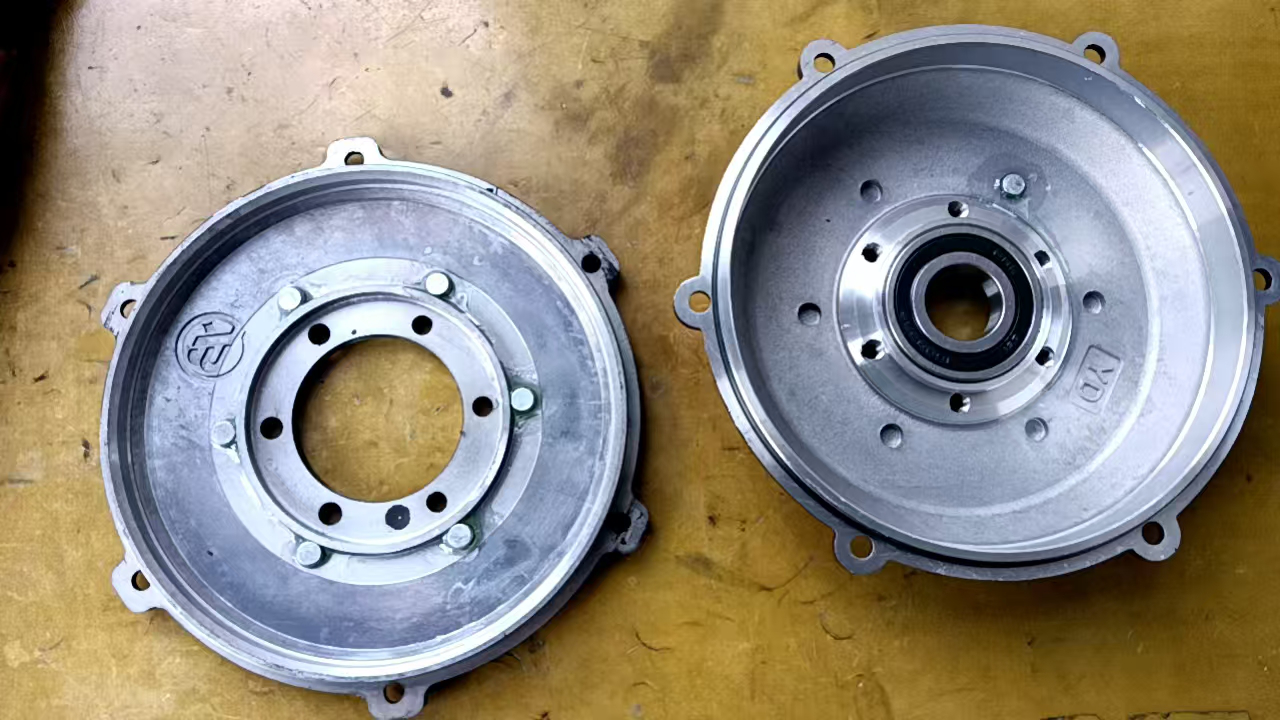
The speed sensor magnet is typically installed on the inner side of the hub motor’s end cover and works in conjunction with the **Hall speed sensor** in the controller.
Its core function is simple: to provide the controller with motor speed signals.
When the hub motor rotates, the speed sensor magnet passes by the Hall sensor, generating a pulse signal. The controller calculates the following based on the number of pulses per unit of time:
Real-time motor speed (RPM)
Vehicle speed (km/h)
Mileage accumulation
Pedal Assist System (PAS) working logic
Without the speed sensor magnet, the controller will be unable to accurately determine the motor’s operating status.
II. Why is a speed sensor magnet necessary for hub motors?
1. To achieve accurate speed measurement and display
It is used for displaying real-time vehicle speed and accumulated mileage on the instrument panel, meeting regulatory requirements and user experience needs.
2. To ensure normal closed-loop control of the controller
In sine wave control and FOC control, speed feedback is essential for:
Smooth starting
Stable cruising
Efficient operation
3. To support the pedal-assist system (PAS) and speed limiting function
Especially in European standard electric assist bicycles (EPACs), the speed signal directly determines:
The 25 km/h speed limit judgment
The timing of power assist cut-off
III. Key Differences Between Single-Speed and Multi-Speed Magnets
* Single Speed Magnet
Working Principle: The Hall sensor outputs 1 pulse for every rotation of the motor.
Technical Characteristics: Simple structure, low cost, low signal frequency.
Advantages: Suitable for low-speed, low-cost systems, low demands on the controller, easy installation and maintenance.
Disadvantages: Lower signal resolution at low speeds, less precise response to speed changes, slightly insufficient for high-precision control.
Typical Applications: Economical electric bicycles, ordinary electric tricycles, basic DC or square wave control systems.
* Multi-Speed Magnets (6 Magnets)
Working Principle: The Hall sensor outputs 6 pulses for every rotation of the motor.
Technical Characteristics: Higher pulse frequency, more precise speed calculation, faster dynamic response.
Advantages: More precise low-speed control, smoother starting and acceleration, suitable for sine wave/FOC controllers, more conducive to energy saving and efficiency optimization.
Disadvantages: Slightly higher cost, higher compatibility requirements for the controller.
Typical Applications: Mid-to-high-end electric bicycles, European standard e-bikes, high-efficiency PMSM hub motors, and models requiring a high-quality riding experience.
CZJB Hub Motor Speed Sensor Magnet Solution
As a professional hub motor manufacturer, CZJB offers the following solutions based on customer needs:
Customizable speed sensor magnet solutions with 1, 3, or 6 magnets
Speed sensing parameters compatible with various controller protocols
OEM/ODM side cover structure design
European standard E-bike compliance support
Ensuring stable, accurate, and efficient operation of the motor in different markets and application scenarios.
FAQ:
A: The controller cannot accurately detect speed, causing unstable control, PAS malfunction, and incorrect speed display.
A: Some controllers allow parameter adjustment, but compatibility should be confirmed in advance.
Not necessarily. The optimal configuration depends on controller type, application, and cost requirements.